CHAPER 1: ORG DESIGN
Building the design organization at Signifyd.
Joined as the company's first product designer. Left as Director of Product, Design & Experience — with a 10-person cross-discipline team, a unified design system, and three flagship product launches.
10
people team
100%
hires promoted
US + UK
distributed scope
3
flagship products shipped
ROLE
Lead Designer → Director
SCOPE
Design + Product Management
TEAM
US + UK, 10 people
TENURE
6 years, 4 months
HOW IT STARTED
My first day at Signifyd was lonely in a specific way.
My first day at Signifyd was lonely in a specific way. I'd come from Adobe — a company with a design engine behind every individual contributor — and I walked in with real confidence. I was their new hire, fresh from a place where design practice was infrastructure. What I found was something more informal. Creative thinking wasn't a shared muscle yet. And I was the person who had promised, in the interview process, that I knew how to change that.
So I got to work — not on the product first, but on the people.
One by one, I started bringing the team into the process I believed in. Not by mandate. By making it feel worth their time, by being in the room for the hard decisions, and by earning enough trust that they'd take a bet with me. It didn’t feel bold at first — I was crossing my fingers. Some things went wrong early. And some wins came faster than I expected.
What followed was the most defining chapter of my career. Exciting, hard, complex, and deeply instructive.
THE BUILD
From first designer to director — and what it actually took.
In the early months, I worked as a team of one inside an engineering-led company that moved fast.
Design had to earn every inch of influence — through the quality of the work, through relationships, and through consistently connecting design decisions to business outcomes.
When the time came to grow the team, I built it myself. Every hire. I looked for people who could think in systems, navigate ambiguity, and push back constructively. Over six years, that team grew to ten people: a design manager leading three product design ICs, a dedicated UX researcher, and four senior product managers, spanning the US and UK ⎯ with org design iterations along the way, aligned to the company’s evolution.
Every designer and researcher I hired received a promotion during their time at Signifyd — leadership above me saw the impact independently and agreed. That's the version of team development I care about: growing people to the point where their value is undeniable to everyone, not just to me.
ORG TRANSFORMATION
Design management models in the face of transformation — scaling the design team.
The design team’s mission was to propel Signifyd’s product experience into the future of commerce. Bold ⎯ though I couldn’t claim I felt bold from day one.
We started by embedding in engineering teams, coverage as a means to agility. As the company grew and moved into a product-led culture, the logic shifted toward focus and impact. Different speeds, different demands — and at times, dramatic transformation that brought real uncertainty with it. I asked myself more than once whether I was making the right choices for my team.
PEOPLE DEVELOPMENT
One of the first things I built wasn't a product — it was a career ladder. Before I had a full team, I wanted clarity on what growth looked like at every level. Formal frameworks for progression tied to structured review cycles, so conversations about advancement were grounded in something concrete, not just a manager's impression.
In practice, that structure made the personal work more honest. I could tell someone exactly where they were, where they were going, and what the gap looked like — without it feeling arbitrary. People knew what they were working toward. In a fast-moving environment where the ground shifts constantly, that clarity mattered.
DESIGN INFLUENCE
Earned, not assigned.
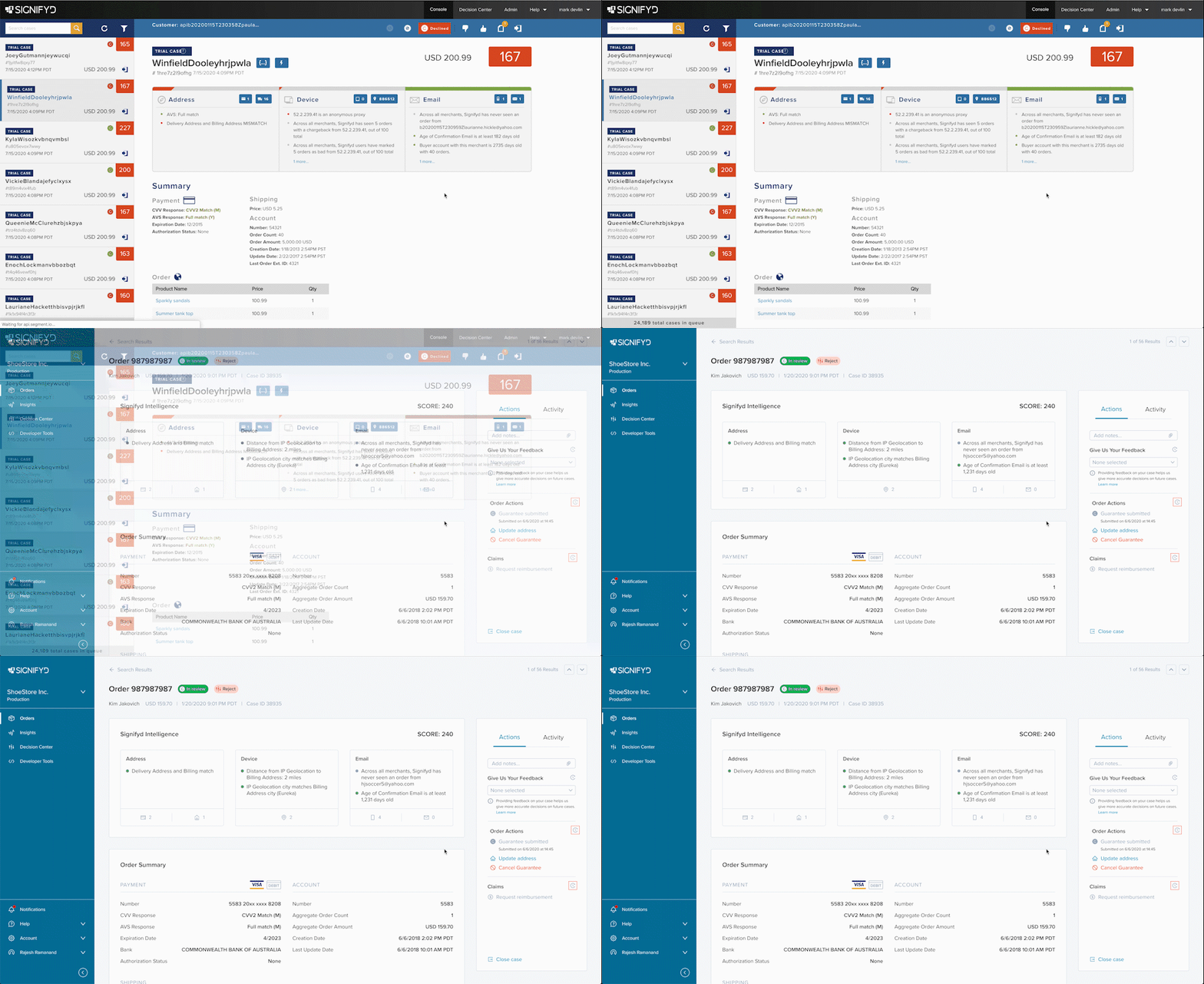
Before and after of the Agent Console UI revamp ⎯ a Design-led initiative defined during design sprint (methodology). Click the image to read the article.
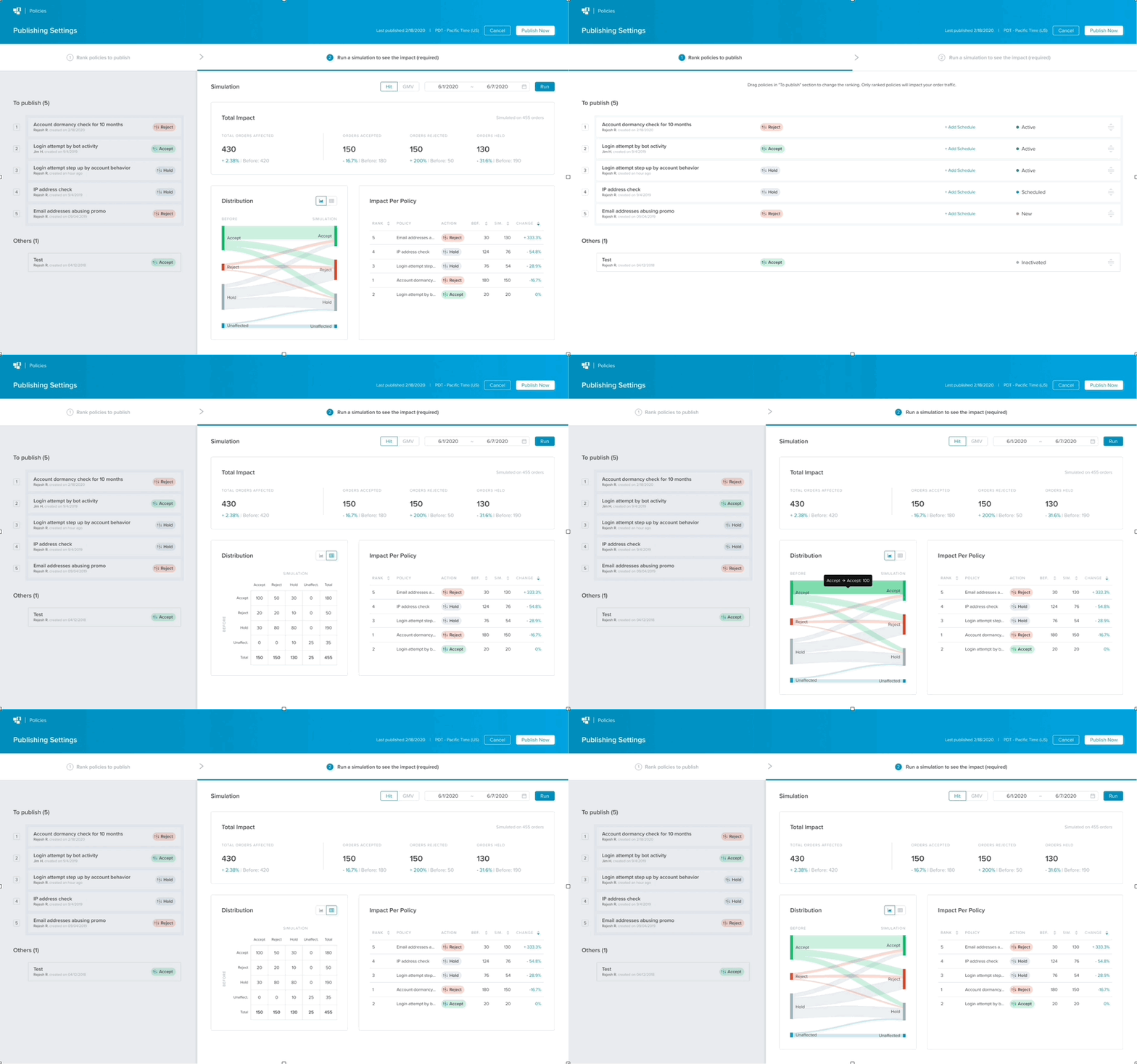
Decision Center, company co-founder and Design-led collaboration. Evolved over the years into Signifyd’s most prominent (and sellable) product experience.
Praise from engineering peer.
Design later allocation model based on priorities, impact over coverage.
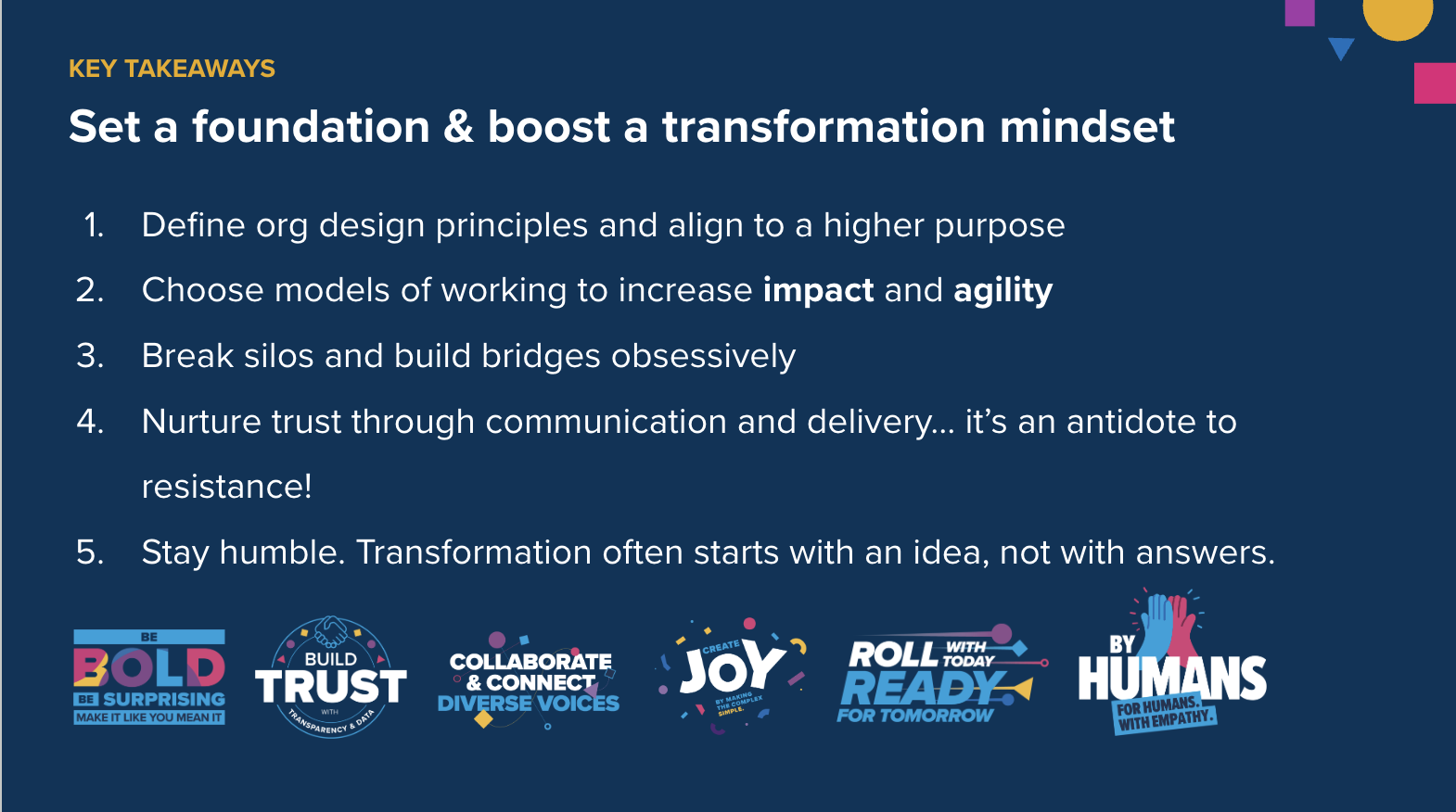
Full design org transformation story presented at Rosenfeld Media’s Design at Scale 2022 conference. Click to watch
Doubt spreads quickly when trust and communication haven't been built. For those receiving change rather than triggering it, doubt can become fear fast. As leaders we have a responsibility to watch for those triggers — and choose transparency to bring people through it.
I learned at each iteration of the design org to stay ahead of that curve: designer allocation in pairs, priority by impact, on-demand flexibility. Tactics that weren't just adaptive — they were anticipatory.
How did I prepare for transformation? I learned that having a transformation mindset (one deeply informed by business savviness) paired with the right design values as foundation nurtured my ability to identify and respond to triggers for transformation.
Structure that serves people, not the org chart.
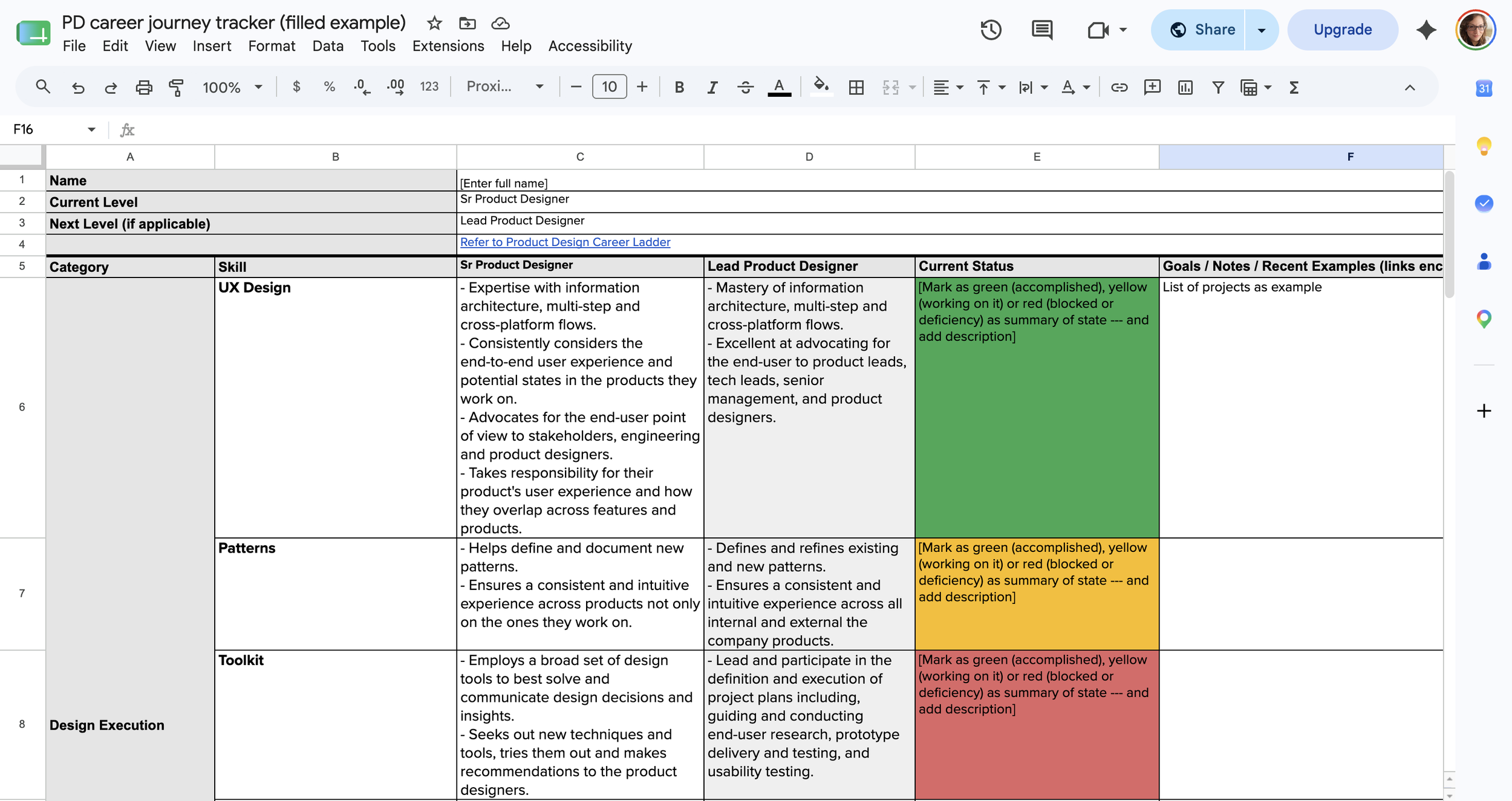
Click to view talent development and career ladder artifacts
Design's influence at Signifyd didn't come with the role — it accumulated. In the beginning, design was one voice among many. What changed was consistency: showing up to the hard conversations, speaking in business language, building trust with product and engineering leaders who had no prior reason to center design in their process.
By the time I held the Director title with both design and PM under my scope, design was embedded in roadmap planning, release decisions, and executive conversations. Watching design move from scrappy to strategic is the part I'm most proud of — not because it reflects well on me, but because it meant the team had built something real. Influence that didn't depend on a single person to sustain it.
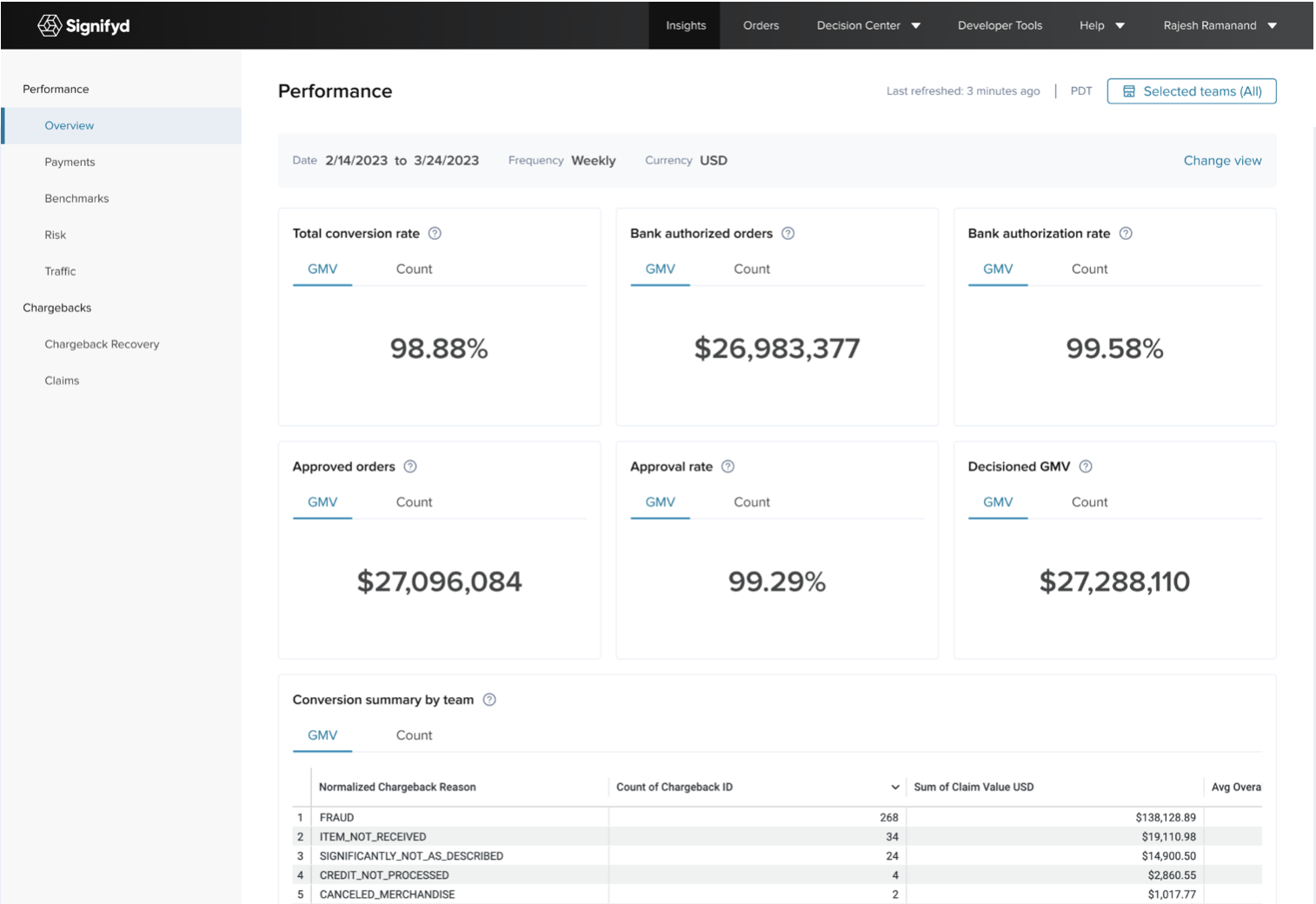
Insights, reporting product owned by the Design & Product Experience org
I also co-founded Signifyd's first employee-led ERG for Black and Latinx employees, which I chaired for over two years across members in the US, UK, and Latin America. Building inclusive culture requires the same skills as building a strong design org: listening carefully, advocating persistently, and creating conditions where people can do their best work.
In Chapter 2, I’ll dive into the complexity in the enterprise products and experiences that my team delivered (browse below to preview).
Within my first six months, I made the case to hire. By month nine, I had brought on my first product designer. That was the moment the role stopped being about proving I belonged — and started being about building something impactful.